Showing posts with label breast cancer. Show all posts

Friday, October 25, 2013

The Pink Month

When I see pink products for sale during the month of October, I wonder how much of the money really goes to researching a cure for breast cancer.  Probably not very much.

I know I'm not alone in this thought because I've heard and read similar comments from others discussing the reason why these products are being sold.  Buy them because you like them or need them.  But I think most people now see those oh so pretty pink-ribboned products as a merchandising trick better left alone.

If anything good has come out of the marketing of these pink products, it is perhaps that they have brought a new awareness to mammograms and the idea that early detection can be a life saver.

We know that breast cancer is a disease that happens twelve months a year, not just in October.
 
Whether a mother or a daughter, grandparent, sibling, or friend, chances are that you know someone affected by breast cancer.
 
I started getting mammograms when I was 35 years old because tragically I had an aunt who lost her life to breast cancer, a cousin who also died from it, another cousin who was diagnosed and treated and is in remission and a sister who thankfully is now in remission because she went in for her annual exam and the doctors found and diagnosed her breast cancer while it was in an early stage.  I also have a very good friend who is currently fighting the good fight and is truly a warrior in keeping herself healthy and positive in her thoughts.
 
Eloise Caggiano
Courtesy of parents.com
Perhaps instead of buying something for sale that is pink and supposedly sold to contribute money to cancer research, why not instead help someone you know who has breast cancer.
 
I saw this terrific post by Eloise Caggiano, the program director for the Avon Walk for Breast Cancer, on a blog at www.parents.com and thought it had some great ideas.  Caggiano is an eight-year breast cancer survivor so her advice comes from a place of experience.  Please read her list of eight ways to help a friend with breast cancer in the link below:

http://www.parents.com/blogs/parents-perspective/2013/10/17/health/8-ways-to-help-a-friend-with-breast-cancer/?socsrc=pmmtw

Friday, August 30, 2013

Tossing My Plastics

Staying healthy is job one for me.
 
Every healthy tip that I can incorporate into my life is just one more thing that may keep me out of the doctor's office as far as I am concerned.  I try to eat foods that are as fresh as possible, exercise whenever I can and verbalize my stress so that it doesn't remain bottled up inside me and cause some kind of sickness.

Recently I added a new health concern to my wellness list: avoiding plastics and/or preservatives.

For years I used to bring frozen food products (read Lean Cuisine) to the office and microwave my lunch until a couple of colleagues took me aside and told me that microwaving plastic and food was a no-no because of a substance called parabens which is contained in the plastic.  Needless to say, I haven't done any food and plastic microwaving since then.

 
Now, I have just found out (maybe you already know this) that parabens are also contained in lots of products that I use all the time: lip balm, toothpaste, make-up, moisturizers, hair care products, sunscreen and deodorant.  The US Food & Drug Administration (FDA) has called parabens the most widely used preservatives in the United States and that's alarming because initial scientific evidence showed that parabens could not be absorbed by the human body but now scientific tests are showing that it can be.

Previous studies on animals and in the laboratory have shown that parabens can mimic the actions of the hormone estrogen.  That has raised a lot of red flags because estrogen is known to fuel some types of breast cancer.

I think it would be difficult if not impossible to completely stay away from parabens but being aware of the products that contain parabens  can give you control over how much parabens exposure you receive.  Since knowledge is power, read the labels of what you are buying and look for the following words because each of these is a variation of parabens:
    • benzylparaben
    • butylparaben
    • ethylparaben
    • methylparaben
    • propylparaben
    • p-hydroxybenzoic acid

I am writing about parabens and our health today because whether you are grieving or going through stressful times, it is important that you take care of yourself.  You are in charge and are just as important as the other person you may be taking care of and, as a widowed person, your health is just as important as a person who may be married or in a long-term relationship.

I am with you in needing to constantly remind myself to do the following: making sure to eat a healthy meal at least once a day, getting enough sleep (even napping during the day), avoiding added stress, choosing to be among people who offer comfort and support rather than those who may sap our energy, physically exercising, like taking a walk, and being open and accepting about our special needs.

Good health is priceless!

Wednesday, May 15, 2013

Angelina's Health Decision

Angelina Jolie made a powerful decision.

It's not a decision that every woman has the opportunity to make, but I stand and applaud her courage and wish her a future of wellness.
 
Faced with medical information from her doctors that she had an 87 percent risk of developing breast cancer and a 50 percent risk of developing ovarian cancer because she carried the BRCA1 gene, she decided to take control of her health and be proactive.  She decided at the young age of 37 to have a double mastectomy which means she had both of her currently healthy breasts surgically removed.
 
Jolie didn't want to wait around for the cancer to come and claim her.
 
Jolie, the winner of an Academy Award, two Screen Actors Guild and three Golden Globe awards, wrote an op-ed piece which appeared in yesterday's New York Times about her medical decision and I think every woman who read it paused afterwards and thanked God for their good health and blessings and maybe at the same time they also thought about someone they had already lost to breast or ovarian cancer or is in treatment.

Whether a mother or a daughter, grandparent, sibling, or friend, chances are very good that almost every New York Times and Cry, Laugh, Heal reader knows someone affected by fbomb cancer.

Actress Angelina Jolie and her partner, Actor Brad Pitt, with their six children
I imagine that every woman, when first diagnosed with breast cancer has two burning questions, "What am I going to do?" and "Will I lose my breast?"  As the mother of six children and the daughter of a woman who died from cancer at age 56, Jolie said she had all the information she needed to face her scary health dilemma, stare down her future and go forward.

Her New York Times op-ed is amazing and for me, her most inspirational words came in the last two sentences:

"Life comes with many challenges.  The ones that should not scare us are the ones we can take on and take control of."
 
Cancer can many times take us to the land of grief and, believe me, it is not a place anyone wants to visit.  But once we find ourselves thrown there, we can and must find a way to get through the tears and the pain and work to find a new way of living our lives.
 
It is about trust, and love, and being human.  And it is most of all about hope.
 
Please don't ever give up.
 
You've got the power.

Tuesday, April 23, 2013

Widowed Fathers Reaching Out

I know a few widowed mothers and have great respect for how they handle the role of single parent.

I don't know any widowed fathers so I have always been curious about how they juggle the demands of raising children and handling their work careers. 
 
I imagine that a family member helps them; maybe a mother, a sister or even a brother.  Or maybe the fathers had already hired someone to help them when their wives sadly became too ill or were weakened by treatments.
 
But after reading the insightful New York Times story below, I found that widowed fathers and widowed mothers essentially struggle and try to deal with the same issues: school, bed time, personal responsibilities and housekeeping.


At the end of the day, it is not possible for one person to physically and mentally juggle it all.  It takes a lot of support to parent your children and take care of your broken heart all at the same time.  And it's okay to admit that.
 
You are not SuperParent.  You need help.
 
Asking for help doesn't mean you are weak.
 
Asking for help is a sign of good mental health.  It means you recognize that your efforts are not changing your situation the way you thought it would and something different needs to be tried.
 
Asking for help is a sign of strength.
 
It doesn't feel that way when it is happening but it's true.
 
I am always in need of help.  Many times I would call my grief counselor and my voice would be shaking and my hands would be shaking and I would try my best to keep it together but it wasn't happening.  Sometimes I couldn't even put together a simple declarative sentence.  All my words would come out in a jumble.
 
It's hard to put yourself out there when you are most vulnerable and in need of kindness and support.  And as a single parent, you feel you have to be strong for your children and show them the way to go.  I'm always asking other parents what's going on with their children and then telling them something that is going on with my child to see if a particular thing is common to them. 
 
"Well how did you get them to eat that?"
 
"What time does your child go to bed?"
 
"Have they asked about blankety-blank yet?"
 
Please read this great New York Times story below focusing on widowed fathers and the wonderful way these guys handled their unexpected situations:

A Lifeline for Widowed Fathers


Three springs ago, Joe Ciriano was living in a fog. He had just lost his wife of 21 years to breast cancer. He was now the sole parent of a son and three daughters, one with Down syndrome. The children, ages 6 through 19, all had different needs and levels of understanding.

Mr. Ciriano, 51, an accounts manager in Burlington, N.C., was riddled with doubts about his ability to carry on as a single parent and was struggling to keep his head above water. While deeply mourning his wife, he was unsure of how good a parent he could be.

“What is normal?” he wondered. What should he say to the kids about their mother? How should he treat them? Could he handle his family and do his job?

With no one to share day-to-day family responsibilities and decisions, and to help fill both his and his children’s emotional and physical needs, life felt “overwhelming,” Mr. Ciriano said in an interview.
Then something wonderful happened. He and Karl Owen, a 49-year-old software engineer from Chapel Hill whose wife had died, of lung cancer, three weeks after Mr. Ciriano’s, were asked to form a support group for fathers widowed by cancer who had children at home.

At the University of North Carolina at Chapel Hill, Dr. Donald Lee Rosenstein, a psychiatrist, and Justin Michael Yopp, a psychologist, weren’t sure how openly these men would talk about their feelings and struggles. But the researchers saw a pressing need to help them and their children through this trying life experience.

Too often, they’d found, widowed fathers contend with social and emotional isolation — a profound aloneness — and suffer in silence.

“I’m not a support-group kind of guy who wants to talk about touchy-feely kinds of things,” Mr. Ciriano said. But finding himself “lost at sea,” he was willing to give it a try.

The result has exceeded all expectations. The eight widowed fathers who formed the core group, led by a professional facilitator, quickly learned that their feelings, doubts and concerns were shared by all and offered one another insights and suggestions on how to cope.

“All the men were exhausted and suffering a crisis in confidence, fearful of screwing things up,” Dr. Rosenstein said. “They faced countless daily issues — school problems, struggles with discipline, bed times, expectations and a tendency to let things slide a little, which really doesn’t work well for kids.”

Mr. Owen said in an interview: “A lot of things that seemed abnormal in our lives were common to the other guys in the group. Someone would bring up a situation, and the rest of us would nod, ‘Yeah, me too.’ These issues were very difficult to discuss with friends who hadn’t been through a similar experience,” said the father of two children, who were 9 and 12 when their mother died.
 
“We were all in a place in our lives we hadn’t prepared for,” he said, “and collectively we could share experiences and help each other navigate.”

Participants in the group developed a remarkable bond, a level of friendship and sharing that is rare among men, who even now are expected to be strong and resilient, and many of whom still avoid talking about deep feelings and doubts.

Three years later, four of the men continue to meet monthly and have benefited so much from the experience that they are reaching out to help other fathers newly widowed by cancer.

Meanwhile, Dr. Rosenstein and Dr. Yopp, who said they could find no similar support groups for widowed fathers, are trying to get others started at cancer centers around the country. They would like to conduct a formal study to determine “what is most helpful and what isn’t to these men,” Dr. Yopp said in an interview.

Ideally, he said, every major cancer center would have a support group for widowed fathers, whose experiences and needs are different from those of widowed women and older men. (More information about how the group works can be found at singlefathersduetocancer.org.)

Cancer is responsible for more widowed fathers than any other cause of death, Dr. Rosenstein and Dr. Yopp noted in an article in the journal Psycho-Oncology. An estimated 100,000 children are living with widowed fathers in the United States, and the trauma of losing a mother at a young age can seriously disrupt a family’s structure and the children’s development, sometimes with lifelong consequences, they wrote.

“There is a pressing need to understand the experiences of these widowed fathers and to develop supportive interventions for them and their children,” they said.

I can attest to the value of such support. I was 16 and my brother was 12 when our mother died of cancer in 1958, leaving my father emotionally, physically and financially drained by her yearlong illness.

To stay afloat, he worked two jobs and had little time to enforce routines and discipline at home. I soon departed for college, and my brother was left to cope on his own with the devastating loss of our mother at so vulnerable an age.

“Men traditionally do not play the role of the more nurturing parent; therefore, as widowed parents, fathers may be less likely to employ child-centric or nurturing parenting styles and more likely to feel unprepared than widowed mothers,” Dr. Yopp and Dr. Rosenstein wrote.

They said various studies had found a clear “link between the mental health of the surviving parent and the adjustment of the parentally bereaved child.”

A major issue for widowed fathers, Dr. Rosenstein said, is providing parental consistency with love and understanding. Good parenting requires structure, clear expectations, well-defined limits and reasonable consequences.

“What I’ve seen happen a lot is the former family order melts away and no new order is put in place,” the psychiatrist said. “This can be tough for kids, who feel cared for when there are limits and consistent discipline.”

The trauma of a young mother’s protracted death from cancer can be exacerbated by the patient’s understandable wish to live as long as possible for her family, Dr. Rosenstein added. These women often choose aggressive therapy until the bitter end, missing the comforts of hospice care and the opportunity to express their love, wisdom and wishes for the family.

In an online survey conducted by the two researchers, nearly half of 144 widowed fathers said their wives had had no chance to say goodbye to their children.

Wednesday, April 10, 2013

A Positive Attitude In Cancerland

I don't always feel positive about all of the situations that life throws my way but I do feel very positive about life.
 
Would I continue to feel positive if I were diagnosed with cancer?
 
I would hope so!  I would hope that my love of living, my love for my family and friends and my love of life in general would kick my fighting spirit into high gear and that I would become determined not to let cancer win.
 
But that's easy for me to say because I have not been diagnosed with cancer.  I know a handful of people who are battling cancer right now and I have learned a lot from them about life, mental outlook, pain and especially love.  I never take my good health for granted.  I work hard to keep myself mentally and physically healthy and by the grace of God, I will stay that way.
 
In the sweet story below, Joel Achenbach, a fantastic reporter and writer for The Washington Post, writes of his mother's optimistic attitude since her breast cancer diagnosis and surgery.  What a warm and courageous woman she is! 

 
Photo By Joel Achenbach/The Washington Post
Joel Achenbach's mother, selling plants at a spring garden festival
 soon after she has surgery for breast cancer

Cancer hasn’t dimmed my mother’s upbeat attitude. How far can optimism take her?

By , The Washington Post 

Published: April 1


A few weeks ago, I took my mom shopping for a refrigerator to replace the one that had been in the kitchen since the Nixon administration. Pleasantries with the salesman took a more somber turn when he revealed that his wife has breast cancer and is seeking to heal herself solely through the power of prayer. My mom listened attentively, then touched the salesman on the chest and said, authoritatively, “Carrot juice! And blueberries!”

 
She is a believer in the restorative powers of fruits and vegetables, and of wholesome living more generally. She doesn’t reject modern medicine, nor would she seek a miracle cure through prayer or New Age therapies. But she is not someone terribly interested in medicine, or technology in general, preferring to exist in a world that is like the one she grew up in — simple, natural, earthy. She has spent her years outdoors, growing plants, doing landscaping, surrounding herself with flowers. She has often ended the day with a cold beer under the grape arbor in her back yard. The yard is a two-acre botanical wonder where she and my stepfather, Jim, have their nursery, plus a robust garden, productive citrus trees and winding footpaths among native plants and towering trees.
 
I called to check on her the other day. After quickly assuring me she was fine, she launched into a prescription for how I might reduce some minor leg pain that’s been bothering me: “Point one foot at the North Pole and one foot at the South Pole and bend over and touch the floor,” she said.
 
Though full of medical advice for others, she doesn’t talk much about her own illness, and it didn’t seem to occur to her to tell the appliance salesman that she, too, has breast cancer, stage 3. Here’s the key fact about my mom: She doesn’t consider herself sick.

She’s the opposite of a hypochondriac, never missing a chance to brag about her unusually good posture and the physical strength that many women her age would envy. She informs doctors that her nickname is Tough Lady. When I asked her if I could write something about her medical situation, she said, “Make sure to include what I tell every doctor: ‘I’m not old, and I’m not sick!’ ”

No question, she has a wonderful attitude, and her sunny disposition if distilled and bottled would be sold in every drugstore on the planet.

A fine line

But an objective account of Emily Notestein’s health history, and of her attitude toward medicine, would surely note that she has not been a diligent student of her disease and that she showed no interest in seeking aggressive treatment when it first appeared. There is a fine line between optimism and denial. The power of positive thinking goes only so far.

How aggressively we deal with cancer hinges in part on age and whether the disease threatens to truncate a life dramatically or merely lop off some years in the final decade or two. And cancer in a septuagenarian can be more indolent than cancer in a young woman. Thus, an older person like my mother faces a different mental calculation than someone who is in the prime of her life. Cancer at 76 doesn’t feel like a tragedy.

My mother first had breast cancer two years ago; she had a lumpectomy and no further treatment. She insisted that she didn’t need chemotherapy or radiation or a combination thereof. A plausible scenario is that she was stunned by the high cost of the procedure, and lacked Medicare Part B coverage, because back when she was 65 she felt no need to sign up for something that would be useful only on the very off chance that someday she would have a medical problem. (“I was healthy!” she told me when I pressed her on it.) What’s indisputable is that the cancer came back in the same breast.

On my Mom’s 76th birthday, in late January, her surgeon performed a mastectomy and also removed 22 lymph nodes.

“Everyone was so nice to me!” Mom said that afternoon, groggy from the outpatient procedure. She didn’t feel as if she’d been mutilated. She felt that she’d been the star of the show.

The next week, she heard the pathology report, and it wasn’t good: cancer in all 22 nodes, officially stage 3 cancer. The initial chest X-ray showed no tumors in vital organs; a subsequent PET scan also turned up no sign that the cancer had spread beyond the nodes. “It’s curable,” Mom said, getting right to the point.
 
She’s being treated at a cancer center by an oncologist who has his hands full. Twice during the brief initial consultation, he was summoned from the small examination room by nurses dealing with emergencies.

I asked him if the cancer looked aggressive.

“It has some characteristics of being rapidly acting,” he said.

He went through the whole scenario: Chemotherapy for 18 weeks, then radiation for six weeks, then years of hormone therapy. Mom would get a port surgically implanted, then receive three cycles of cytoxan, epirubicin and fluorouracil for nine weeks, followed by three cycles of Taxotere for another nine weeks.

My mother took no notes. I later suggested that she research her disease thoroughly. But whereas I saw a problem to be solved, she saw one to be ignored to the extent humanly possible. Her doctor is the expert; she’s the plant lady. She’s going to live her normal life, and won’t spend time, mentally, in Cancerland.

Built to last

All is not as it was, of course. She’s slower since the surgery. She’s got less “steam,” she says.
She hasn’t had the easiest life, though her third marriage has lasted nearly four decades now. She was a divorced, single mother by the age of 25, working as a saleswoman at Sears while trying to take care of two semi-feral boys in an old wooden house with a leaky roof. We had some lean years, but my brother and I knew we were loved unconditionally.

My mother inherited a strong work ethic, and remarkable powers of endurance, from her forebears back on the farm in Indiana. Her family didn’t have indoor plumbing until she was 12 years old. My grandfather as a boy would plow the fields behind two Belgian draft horses, and would know it was time to come home for supper when his mother hung a sheet in the window. “Tell me about the horses, Dad,” my mother would say to my grandfather when he was deep into his 90s and clung to his murky memories as if they were handrails. He and my grandmother both lived nearly a century. So my mother is built to last, if she can just make it through her next challenge.

I can’t be sure of this, but she seems to be appreciating the world more than ever. My mother is not a society lady, isn’t a member of a club and hasn’t been to church in quite a while. But she is interested in everyone and everything. She is egalitarian down to her last molecule. When we went to Wal-Mart, it was hard to make much progress toward the kitchen section because she wanted to greet everyone along the way. She doesn’t seem to grasp the concept that the official Wal-Mart greeter is supposed to be an employee, not a customer.

Throughout her life, small pleasures have struck her as marvelous. A sandwich nicely prepared is a cause for rapture. In a field of weeds and rubbish she will see, and rejoice in the miracle of, the lone flower.

“Death holds no terror for me,” she always says.

Fear and anxiety are adaptive traits to some degree, and the perpetually sunny disposition may not invariably offer an actuarial advantage. I worry that her rose-colored glasses are blinders. But her attitude makes the process easier on everyone else. That’s a form of caregiving. It’s a gift from the sick person to those who worry about her.

I called her from Washington after her first round of chemotherapy.

“It was a nonevent!” she reported. “It lasted awhile and I got hungry, so afterward we went to Wendy’s and I had a baked potato. It was delicious!”

Chemotherapy, in time, will surely beat her up, and she’ll lose her hair, and her melodious singsong voice, her trademark feature, may weaken. But will she ever feel sorry for herself? I don’t think she’d know how.

As an analytical person, science-oriented, I find it hard to ignore the medical realities here, but my mother in her congenital sunniness is strangely persuasive. And so I have no choice but to believe her: She’s not old, and she’s not sick.

© The Washington Post Company

Wednesday, January 18, 2012

Discovering The Silver Pen

A close relative just shared this insightful poem with me.  J. Hendel totally nailed it.  This poem and others can be found on a beautiful website called The Silver Pen.  When I first logged on to The Silver Pen a few days ago, I wondered how I could have missed this great site since it has been on the internet for a little over three years.  Things like this make me nervous because I start to wonder what else is out there that I don't know about.  Oh well...I'm sure it's a helluv a lot of stuff! 

I've added The Silver Pen to the list of blogs that I follow and I hope you will check it out when you get a chance:  http://www.thesilverpen.com/


Saturday, June 4, 2011

Pretty In Pink -- Grieve Out Loud

http://www.washingtonpost.com/local/after-losing-three-sisters-to-cancer-bethesda-firefighter-turns-to-advocacy/2011/05/26/AGDZfqHH_story.html


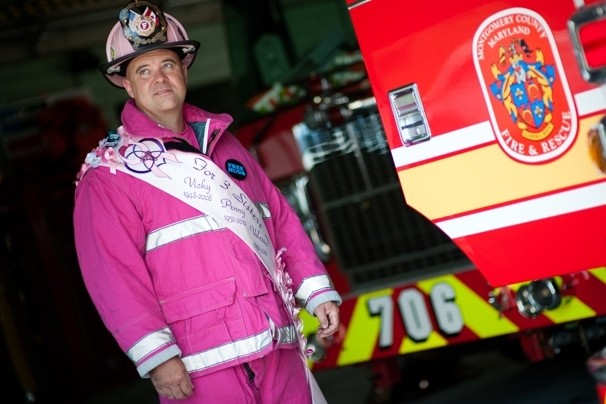
I read this timely story in The Washington Post yesterday about a local fireman, Marshall Moneymaker, who had lost his three older sisters to breast cancer in less than two years.  Moneymaker and his wife did all they could to help the three sisters beat this awful disease but it wasn't enough.  After burying three sisters, the enormity of what had happened left Moneymaker emotionally exhausted.

Where do you go when you have felt pain and loss deeper than you ever thought possible?

You can shut down and put out the "Vacant" sign or you can stay involved in life and fight back.  And that is exactly what Moneymaker did.

A month after he had buried the third sister, some volunteers for the Susan G. Komen 3-day Walk for the Cure were coincidentally setting up a pitt stop near his firehouse in Bethesda, MD.  One thing led to another and he and the other volunteers started talking about breast cancer and how it had dramatically touched their lives.  One of the volunteers Moneymaker met was Mollie Simpkins.  Simpkins said she felt a bond with Moneymaker and she liked his generous spirit.

"After you lose someone to cancer, you're not sure if you're grieving or honoring the dead properly," Simpkins said.  "Everybody has their own way.  There are those that grieve in silence, and then there's us."

Moneymaker's actions in the face of personal tragedy are incredibly heroic and show us that freedom comes from not being afraid to grieve out loud.

Check out the picture of Moneymaker above decked out in pink as a tribute to his sisters.  That's my idea of a real man!